
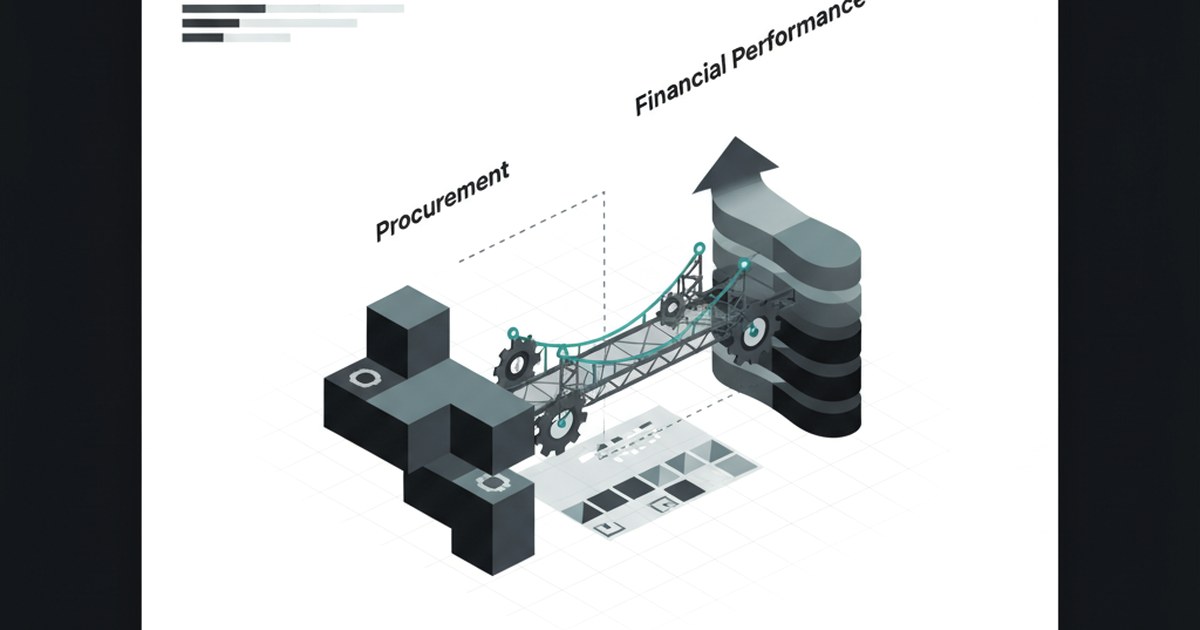
Bridging the Gap Between Procurement and Financial Performance
In today’s fiercely competitive business environment, companies are under immense pressure to optimize costs while maximizing value. Procurement functions, traditionally seen as back-office operations, are being redefined as strategic partners that directly influence financial performance. However, many organizations still face a disconnect between their procurement teams and overall financial goals. This disconnect can lead to missed opportunities for cost savings, inefficient resource allocation, and ultimately, a deterioration of profitability. So how can procurement leaders ensure that their efforts contribute meaningfully to financial performance?
Aligning Procurement Goals with Financial Objectives
To achieve synergy between procurement and financial performance, it starts with clear alignment of goals. Procurement should not be a standalone function; instead, it should be integrated with the finance team and linked to the company’s strategic objectives. This alignment requires a shift in mindset and collaboration. For example, a manufacturing company aiming to reduce production costs can encourage its procurement team to partner with finance to determine which materials offer the best cost-quality ratio. By collaboratively establishing key performance indicators (KPIs) that reflect both procurement efficiency and financial effectiveness, organizations can foster a cooperative approach that drives greater results. Additionally, establishing joint planning sessions and review processes can help identify discrepancies between procurement activities and financial outcomes. Teams should regularly address how procurement initiatives, such as renegotiation of supplier contracts or consolidation of purchase orders, can be aligned with financial metrics like cash flow and profit margins. Ultimately, this integrative approach lays the groundwork for stronger financial performance.
Data-Driven Decision Making
In an age where data reigns supreme, utilizing analytics to inform procurement decisions has never been more crucial. Procurement leaders should be equipped with the right technology and data analysis tools that allow them to track spending patterns, supplier performance, and market trends. For instance, a leader at a retail chain implemented a new procurement analytics platform that provided real-time data tracking on inventory levels and supplier reliability. As a result, the team was able to identify underperforming suppliers whose products frequently caused stockouts. Armed with this data, they not only negotiated better terms but also diversified their supplier base. This proactive approach led to a 15% reduction in inventory holding costs and improved order fulfillment rates. By embedding data analytics into procurement workflows, teams can measure and predict cost-saving opportunities, manage supplier risk, and enhance provider relationships. These data-driven decisions contribute to improving the financial health of the organization and allow procurement to operate as a key strategic function.
Empowering Supplier Relationships
The relationship between a company and its suppliers is essential for achieving financial performance goals. Procurement teams need to shift their approach from a transactional mindset to one that fosters collaboration and innovation. Investing in long-term supplier relationships can yield significant financial benefits. Consider a technology company that invested in a Supplier Relationship Management (SRM) program. By fostering open communication and involving suppliers early in the product development process, the company was able to co-design solutions tailored to both parties’ needs. As a result, they reduced lead times for new products, improved quality, and achieved a cost reduction of 20%. This not only enhanced their product offering but also positively impacted their financial performance. By prioritizing collaboration and mutual benefit, procurement leaders can cultivate strong relationships that lead to innovation, improved efficiencies, and ultimately a stronger bottom line.
Fostering Agile Procurement Practices
In today’s rapidly changing marketplace, agile procurement practices are essential for maintaining competitiveness and adapting to market demands. Procurement leaders need to be flexible enough to respond quickly to changing economic conditions, customer preferences, and supply chain disruptions. Take the example of a consumer goods company that faced sudden spikes in demand due to a global trend. Rather than following a rigid procurement process, they empowered their teams to take swift action. By leveraging existing supplier relationships and utilizing data analytics, the team quickly sourced alternative packaging materials that fulfilled the increased demand without a significant price hike. This agility not only satisfied customer needs but also strengthened their market position. By fostering an agile procurement strategy, companies can respond proactively to market changes, avoid unnecessary expenses, and improve financial performance against a backdrop of uncertainty.
Measuring Success
To quantify the impact of procurement on financial performance, organizations should establish metrics that are closely aligned with overarching business goals. Traditional metrics like cost savings and spend under management are important, but they need to evolve. For instance, procurement teams should focus on total cost of ownership (TCO), which considers all costs associated with acquiring and managing a product over its lifecycle. Additionally, measuring initiatives such as supplier innovation contributions and risk mitigation strategies can provide deeper insights into how procurement impacts the financial health of the organization. For a strategic approach, organizations might consider creating a dashboard that showcases real-time procurement metrics intertwined with financial KPIs. This transparency allows all stakeholders to see how procurement efforts are driving value and supports continued investment in procurement capabilities. Ultimately, tying procurement performance directly to financial results ensures that teams remain focused and accountable for their contributions to the company’s success.
Delivering Value Through Collaboration and Insight
Bridging the gap between procurement and financial performance is no small task, but it is essential for success in a modern business landscape. By fostering alignment between procurement and finance, driving data-informed decision-making, cultivating supplier relationships, embracing agility, and measuring success effectively, organizations can unlock significant value. The real impact of procurement extends beyond negotiating contracts and purchasing goods. It contributes to strategic financial outcomes that drive business growth, adaptability, and resilience. By taking these steps, procurement leaders can reveal their true potential as catalysts for transformative change, ultimately leading to sustainable business success.