
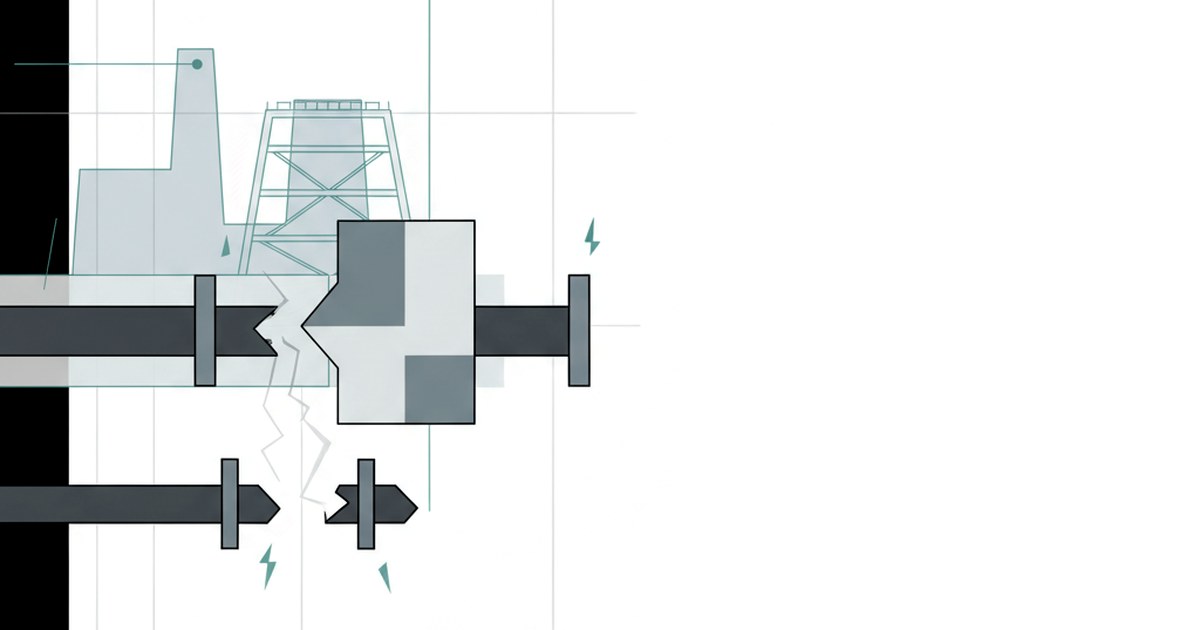
Data latency—the gap between when procurement data is generated and when it reaches decision-makers—drives cost overruns, missed negotiation windows, and supply chain disruptions on capital projects. In EPC, LNG, T&D, and heavy manufacturing, where a single material escalation clause can shift project economics by millions, stale data is not a minor inconvenience. It is a structural risk.
This post breaks down the causes and downstream effects of data latency in capital project procurement, and outlines strategies teams use to close the gap.
Key Terms
| Term | Definition |
|---|---|
| Data latency | The delay between the moment procurement data is generated or available and the moment it is used in a decision |
| Capital project procurement | The sourcing and purchasing of materials, equipment, and services for large-scale infrastructure or industrial projects |
| Supply chain ripple effect | A cascading series of disruptions caused by a single delay propagating across suppliers, schedules, and budgets |
| Real-time data access | The ability to retrieve and act on procurement data within seconds or minutes of its creation |
| Cross-functional collaboration | Coordinated decision-making between procurement, supply chain, engineering, and project management teams |
What Causes Data Latency in Procurement
Data latency in capital project procurement has several root causes:
- Manual data entry and handoffs — Vendor quotes arrive via email, PDF, or portal. Teams re-key data into spreadsheets or ERP systems, introducing hours or days of delay.
- Siloed systems — Procurement, supply chain, and project management often operate on disconnected platforms. Data generated in one system does not reach another until someone manually transfers it.
- Batch reporting cycles — Many organizations rely on weekly or monthly reporting cadences. By the time a procurement manager reviews a supplier performance report, the underlying conditions have already changed.
- Unstructured data formats — Vendor submissions arrive in inconsistent formats (PDFs, Excel files, email bodies). Normalizing this data for comparison takes time, and the delay compounds across dozens of vendors.
Key Takeaway: Data latency is not a single-point failure. It compounds across manual handoffs, siloed systems, batch reporting, and unstructured vendor data—each adding hours or days before procurement teams can act.
The Ripple Effect of Delayed Data
A two-week delay in material cost data on a single project does not stay contained. The downstream effects cascade:
| Impact Area | What Happens | Business Consequence |
|---|---|---|
| Material costs | Teams negotiate based on outdated pricing | Budgets overrun when actual costs exceed stale estimates |
| Supplier schedules | Partners lack visibility into updated timelines | Production schedules misalign, causing idle capacity or rush orders |
| Cash flow | Payment projections rely on lagging data | Working capital is misallocated across the project portfolio |
| Contract terms | Negotiation windows close before teams have current data | Organizations lock in suboptimal terms or miss rebate thresholds |
| Portfolio coordination | Delays on one project obscure resource needs for others | Multi-project organizations double-book or under-allocate resources |
When procurement teams scramble to reconcile outdated information, they shift from proactive sourcing to reactive firefighting. Opportunities to negotiate better terms, identify alternative suppliers, or consolidate spend across projects disappear.
Key Takeaway: Data latency on a single project creates a ripple effect across the entire project portfolio—disrupting supplier schedules, cash flow, contract negotiations, and resource allocation simultaneously.
Strategies to Reduce Data Latency
Real-Time Data Access and Centralized Dashboards
Cloud-based procurement platforms eliminate batch reporting cycles by providing real-time visibility into supplier performance, material pricing, and project timelines. Procurement managers monitor live dashboards rather than waiting for weekly reports, enabling immediate action when a supplier falls below expectations or material availability shifts.
Purchaser extracts vendor data from emails, PDFs, and portals automatically, then normalizes it into structured line items for side-by-side comparison. This eliminates the manual re-keying step that introduces days of latency on every RFQ cycle.
Automated Data Normalization
Unstructured vendor submissions are one of the largest latency sources. When quotes arrive in inconsistent formats, teams spend hours—sometimes days—manually aligning data before any comparison can begin.
Purchaser maps vendor responses to your RFQ requirements automatically, transforming inconsistent formats into a structured comparison. Deviations, assumptions, and exclusions are flagged for review before they become post-award disputes.
Cross-Functional Collaboration Platforms
Silos between procurement, supply chain, engineering, and project management compound data latency. Information trapped within departments does not reach decision-makers in time.
Shared platforms and regular cross-functional review cycles reduce this gap. One manufacturing company integrated its supply chain management and procurement systems, resulting in a 20% reduction in order processing time and accelerated project delivery timelines.
Predictive Analytics for Proactive Decisions
Organizations that layer predictive analytics on top of real-time data can forecast potential delays or cost increases before they materialize. Instead of reacting to a material price spike after it hits, procurement teams adjust sourcing strategies based on leading indicators—commodity futures, supplier lead-time trends, and logistics disruptions.
| Strategy | Latency Reduced | Primary Benefit |
|---|---|---|
| Real-time dashboards | Batch reporting cycles (days → minutes) | Immediate visibility into supplier and cost data |
| Automated data normalization | Manual re-keying (hours/days → seconds) | Structured, comparable vendor data on every RFQ |
| Cross-functional platforms | Inter-departmental handoffs (days → real-time) | Shared visibility across procurement, engineering, and project teams |
| Predictive analytics | Reactive decision cycles (weeks → proactive) | Forecasted risks enable pre-emptive sourcing adjustments |
Key Takeaway: The highest-impact latency reductions come from automating data normalization and providing real-time, cross-functional visibility—eliminating the manual handoffs and siloed systems that introduce the most delay.
The Human Element: Culture and Training
Technology alone does not eliminate data latency. Teams must be trained to act on real-time data and empowered to make decisions without waiting for the next reporting cycle. Key cultural shifts include:
- Responsiveness over perfection — Act on 90%-accurate real-time data rather than waiting for 100%-accurate data that arrives too late
- Agile procurement practices — Short review cycles and iterative sourcing decisions, rather than monolithic quarterly reviews
- Data literacy — Every team member understands what data latency costs the organization and knows how to use available tools to reduce it
- Continuous improvement — Regular retrospectives on procurement cycle times, identifying where latency crept in and how to prevent it
Key Takeaway: Reducing data latency requires a cultural shift toward responsiveness and agile decision-making, not just new technology. Teams that prioritize speed-to-insight over perfect data consistently outperform those that wait.
Measurable Business Outcomes
Organizations that systematically reduce data latency in procurement report concrete improvements:
- 15–25% reduction in procurement cycle times from automated data normalization and real-time dashboards
- 10–20% improvement in negotiated contract terms from acting on current market data rather than stale reports
- Fewer post-award disputes when scope deviations and assumption gaps are surfaced before contract execution
- Improved cash flow forecasting from real-time visibility into committed spend and supplier delivery timelines
- Audit-ready documentation with complete traceability from vendor submission to award decision
Every dollar of latency reduction translates into either direct cost savings or risk mitigation on capital projects where margins are thin and change orders are expensive.
Key Takeaway: Reducing data latency produces measurable outcomes—shorter cycle times, better contract terms, fewer disputes, and defensible audit trails that protect organizations on high-stakes capital projects.
Frequently Asked Questions
What is data latency in procurement? Data latency is the delay between when procurement data (vendor quotes, supplier performance metrics, material pricing) is generated and when it reaches decision-makers in a usable format. In capital project procurement, this delay typically ranges from hours to weeks depending on the data source and organizational processes.
How does data latency affect capital project budgets? Stale data leads to negotiations based on outdated pricing, missed rebate thresholds, and inaccurate cost forecasts. On capital projects where material costs can shift significantly week-over-week, even a few days of latency can result in budget overruns of 5–15% on affected line items.
What is the fastest way to reduce procurement data latency? Automating data normalization delivers the largest immediate impact. Manual re-keying of vendor quotes is the single biggest latency source on most RFQ cycles. Purchaser eliminates this step by extracting and structuring vendor data automatically, reducing quote comparison time from days to minutes.
Does reducing data latency require replacing existing ERP systems? No. Most latency reduction strategies layer on top of existing systems. Cloud-based procurement platforms integrate with ERP, supply chain, and project management tools to provide real-time visibility without requiring a full system replacement.
How do you measure procurement data latency? Track the elapsed time between key events: vendor quote submission to structured comparison availability, market price change to procurement team awareness, and scope change to updated vendor communication. Benchmarking these intervals identifies the highest-latency steps in your process.
Action Checklist
- Audit current procurement data flows to identify the highest-latency handoffs
- Measure elapsed time from vendor quote submission to structured comparison availability
- Evaluate automated data normalization tools to eliminate manual re-keying
- Implement real-time dashboards for supplier performance and material pricing
- Integrate procurement, supply chain, and project management platforms to eliminate data silos
- Establish cross-functional review cadences (weekly minimum) for active capital projects
- Train procurement teams on acting on real-time data rather than waiting for batch reports
- Set up predictive analytics for commodity pricing and supplier lead-time trends
- Define latency reduction targets and track progress quarterly