
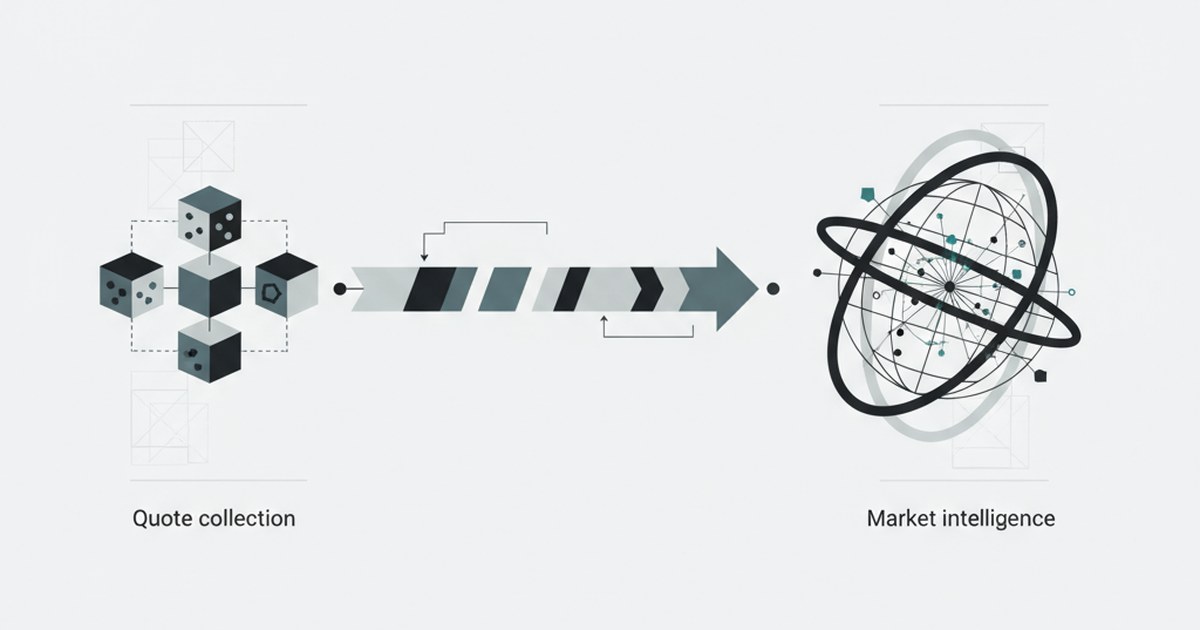
From Quote Collection to Market Intelligence
In today’s fast-paced business environment, procurement, supply chain, and operations leaders face a constantly evolving landscape of challenges. The need for optimized sourcing strategies, cost reductions, and supplier evaluations often leads teams to rely heavily on quoting processes. However, merely collecting quotes is no longer sufficient to maintain a competitive edge. To boost efficiency and shape robust strategies, leaders must transform this quote data into actionable market intelligence.
The Evolution of Quote Collection
Traditionally, quote collection has been viewed as a transactional exercise – an act of soliciting offers from suppliers and choosing the most favorable terms. As a result, many organizations have approached this process with a degree of routine, sometimes overlooking its potential as a tool for deeper analysis. Today, smart leaders understand that quotes can reveal critical insights beyond simple pricing structures. For instance, examining quotes can help uncover industry trends, competitive positioning, and even potential risks associated with certain suppliers. Consider the example of a manufacturing company that regularly collects quotes from multiple suppliers for raw materials. By systematically analyzing these submissions over time, the procurement team discovered a pattern: a particular supplier consistently offered lower prices compared to others in the region. By investigating further, they uncovered that this supplier had taken significant cost-cutting measures, raising concerns about product quality. Thus, their routine quote collection interaction transitioned into a deeper analysis of supplier credibility and risk management.
Transforming Data into Actionable Insights
Once procurement teams embrace the idea that quotes carry valuable insights, it’s critical to establish a framework for extracting relevant data. Potential methods include: -
Standardized Evaluation Criteria
: Develop clear criteria that encompass quality, delivery terms, financial stability, and past performance. By aligning this with quote collection, your team can generate consistent evaluations across suppliers. -
Benchmarking
: Utilize collected quotes to create benchmarks for pricing and service levels. This process not only aids in negotiating better terms but also provides a reference point to gauge supplier performance over time. -
Cross-Functional Collaboration
: Work with other departments, such as finance and operations, to integrate perspectives into your analysis. This collaborative approach enriches the evaluation process, revealing insights that a siloed procurement team might miss. For instance, a technology company faced escalating component costs. Instead of accepting higher quotes from existing suppliers, the procurement team engaged with engineering and finance to understand the implications of different supplier choices on product time-to-market and R&D budgets. This holistic analysis allowed them to negotiate better terms with suppliers while ensuring product integrity.
Analyzing Market Trends through Quote Patterns
Markets are dynamic, influenced by factors ranging from global pandemics to regional trade policies. Collecting quotes from various suppliers gives organizations a front-row seat to these market changes. By regularly analyzing quoting data against external factors, teams can forecast trends and adapt their strategies accordingly. Using a retail example, consider a company that sells consumer electronics. By monitoring quote trends over several quarters, the procurement team noticed a sudden spike in prices for semiconductor chips. After further investigation, they discovered demand surges tied to a new technology release. By acting quickly, they locked in prices before the trend escalated, ensuring they maintained profitability margins. Moreover, integrating market intelligence tools can further enhance these insights. Platforms that aggregate data from multiple sources allow leaders to evaluate not just their suppliers but the broader market landscape, facilitating strategic decision-making.
Harnessing Technology for Deeper Insights
While traditional methods of quote collection still hold value, technology can streamline and enhance the process. Having a centralized database or utilizing procurement software provides organizations with tools to analyze historical data, track trends, and forecast future costs efficiently. For example, cloud-based procurement platforms allow for real-time updates and collaborative features that can be invaluable for cross-functional teams. These tools can automate the quote collection process, facilitating quicker analysis by producing reports that highlight key metrics such as price variations, delivery times, and service performance. Furthermore, integrating artificial intelligence can refine the data analysis process. AI-driven analytics can identify patterns more effectively than manual methods, enabling teams to act on insights faster. A logistics company adopting AI algorithms found that it could predict supplier performance based on historical data, allowing them to proactively address potential issues before they affected operations.
Turning Insights into Strategic Action
At the end of the day, the insights derived from quote data are only as valuable as the actions taken based on them. Leaders must establish processes for communicating these insights across their organizations, particularly to those involved in decision-making and supplier selection. A strong example comes from a pharmaceutical company that streamlined its procurement activities by developing a dashboard to relay key metrics obtained from quote analysis to relevant stakeholders. By keeping all parties updated and informed, the team rapidly adjusted sourcing strategies in response to changing market conditions, ultimately improving product launch timelines and maintaining competitive pricing against rivals. Ultimately, the transformation of quote collection into market intelligence provides organizations with a comprehensive toolkit for decision-making. By moving beyond transactional quote processes to embrace data-driven insights, procurement and supply chain leaders can strategically position their companies for long-term success.
Building a Future-Ready Organization
Equipping procurement, supply chain, and operations leaders with the ability to turn quotes into market intelligence is not solely an exercise in data management—it’s a strategic imperative linked to measurable business outcomes. Organizations that prioritize this transformation will not only enhance their operational efficiencies but also craft strategies that keep them ahead of competitors. As cost pressures and market fluctuations persist, the insights from a focused quoting process can lead not only to smarter negotiation tactics and supplier selections but also drive innovation and strategic growth initiatives. A commitment to extracting intelligence from every quote not only positions your procurement team as an ally in achieving organizational goals but can also cultivate a culture of informed decision-making across the board. In a world driven by data, those who harness the potential of quote intelligence will find themselves at the forefront of their industries, ready to meet challenges head-on and sustain growth in a volatile landscape.