
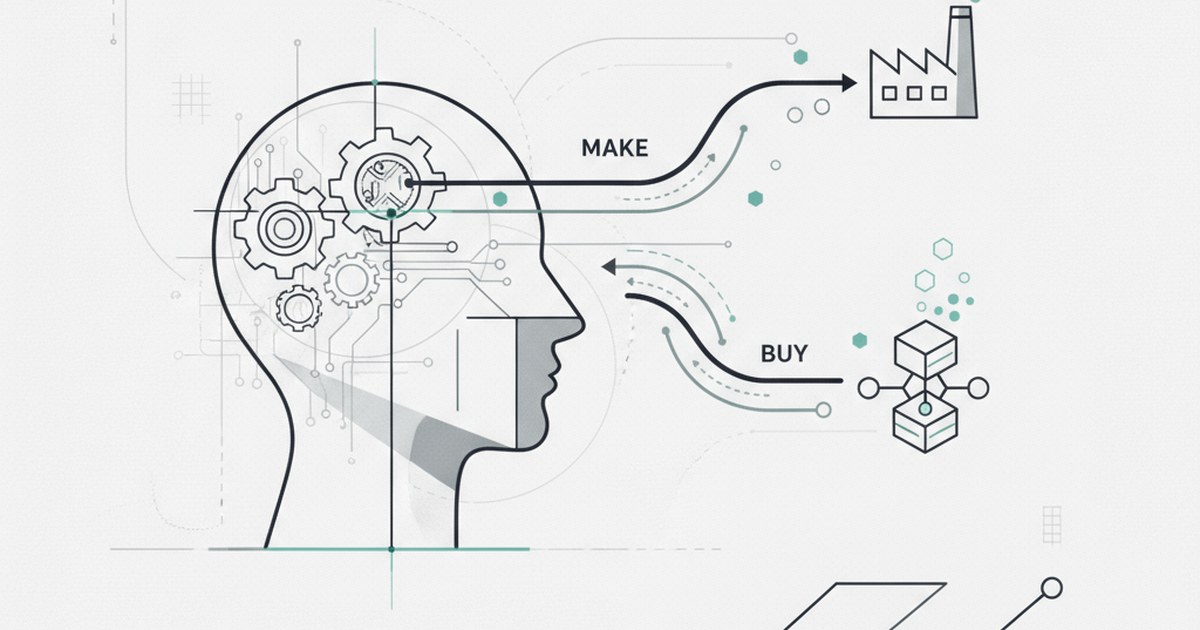
How AI Enables Smarter Make Versus Buy Decisions
In today’s fast-paced business environment, the question of whether to make in-house or buy from external vendors presents a significant challenge for procurement, supply chain, and operations leaders. The stakes are high; a misguided decision can lead to increased costs, lost time, and operational inefficiencies. With the integration of artificial intelligence (AI) into decision-making processes, organizations can leverage data-driven insights to make more informed make versus buy decisions. This blog post explores how AI is transforming this crucial aspect of business strategy, allowing leaders to navigate complexities with greater confidence.
Understanding the Make Versus Buy Dilemma
The make versus buy dilemma involves evaluating whether to manufacture a product internally or purchase it from a third party. This is not a new challenge; however, the stakes have changed in today’s interconnected and dynamic market. Leaders must consider factors such as cost, quality, strategic alignment, and time to market. Traditionally, this involved gut feelings and past experiences, often leading to suboptimal choices. AI offers a powerful remedy by providing organizations with the ability to analyze vast amounts of data quickly and accurately. For instance, predictive analytics can forecast market demand, enabling decision-makers to gauge whether the anticipated production volume justifies the investment in manufacturing capabilities. By using AI to evaluate these variables, procurement and supply chain leaders can base their decisions on hard data rather than intuition.
Data-Driven Insights: The Power of Predictive Analytics
One of the primary advantages of integrating AI into procurement processes is its ability to generate predictive insights. Let’s consider a global electronics manufacturer facing fluctuating demand for components. Historically, the company relied on historical sales data without advanced analytics, leading to either overproduction and surplus inventory or stockouts. By adopting AI-driven predictive analytics, the firm can analyze not only past sales data but also consider market trends, seasonality, and consumer behavior. Machine learning algorithms can pinpoint the optimal moments to ramp up production or seek external suppliers. In this scenario, a clear picture emerges: AI enables a more agile approach to sourcing decisions, reducing reliance on risky assumptions.
Cost-Benefit Analysis Made Smarter
A critical aspect of the make versus buy decision involves conducting a thorough cost-benefit analysis. While many organizations undertake this assessment, incorporating AI can streamline and enhance the evaluation process. Imagine a mid-sized company considering whether to build a new manufacturing plant or purchase components from a reliable supplier. Utilizing AI-driven financial modeling tools, the company can simulate various scenarios, taking into account projected labor costs, material expenses, overhead, and potential disruptions. These advanced modeling capabilities can reveal hidden costs that may have otherwise been overlooked, such as the long-term implications of capital investment versus operational flexibility. Furthermore, AI can quantify risks associated with each path, providing a more comprehensive understanding of potential returns. This data-driven vantage point empowers decision-makers to choose the route that aligns with their business goals while mitigating potential pitfalls.
Supply Chain Optimization: The Role of AI in Streamlining Decisions
Supply chain dynamics can heavily influence the make versus buy decision. A responsive and efficient supply chain ecosystem is vital for maintaining a competitive edge. AI can enhance visibility across the supply chain, enabling procurement leaders to identify potential bottlenecks or inefficiencies that may arise from either making or buying. Take, for instance, a food and beverage manufacturer weighing the benefits of sourcing packaging materials internally versus purchasing them from suppliers. AI-powered tools can analyze supplier performance metrics, delivery timelines, and quality compliance. By drawing on historical and real-time data, the organization can assess the reliability of suppliers against its production capabilities. Moreover, AI can recommend alternative suppliers or sourcing strategies if it detects an elevated risk of disruption, enabling organizations to optimize their decision-making framework. With streamlined supply chain insights, leaders can respond proactively, ensuring consistent product availability while minimizing costly delays.
Enhancing Collaboration through AI-Driven Platforms
When navigating the make versus buy decision, collaboration across departments is key. Insights from engineering, finance, and marketing can shape the final decision, but gaps in communication often create friction. AI-driven platforms can facilitate collaboration by integrating data from various functions into a single interface, ensuring everyone has access to the same insights. For example, a consumer goods company may be unsure whether to produce a new line in-house or partner with an external manufacturer. Leveraging AI-enhanced project management tools, stakeholders from R&D and procurement can jointly evaluate factors like product specifications, production timelines, and associated costs. Real-time data shared across teams can significantly reduce decision-making time and minimize the risk of miscommunication. Moreover, these collaborative platforms enable organizations to simulate joint scenarios, helping teams visualize the impact of different decisions and refining strategies accordingly.
The Path to Measurable Business Outcomes
As organizations navigate the decision-making landscape, embracing AI for make versus buy assessments is not just a technological upgrade; it’s a strategic imperative. By harnessing data-driven insights, organizations can ensure that their choices align with both immediate business needs and long-term objectives. The resulting advantages are tangible—enhanced efficiency, reduced costs, and ultimately, improved profitability. The AI-driven approach leads to confident, informed choices that can transform procurement strategies into powerful competitive advantages. Organizations that adopt this mindset can better mitigate risks, optimize resources, and respond effectively to changing market dynamics, leading to overall improved business outcomes. In conclusion, while the make versus buy decision will always carry inherent complexities, AI serves as a guiding light in this intricate landscape. By bolstering data-driven insights and fostering cross-departmental collaboration, organizations stand to gain a significant edge over their competitors, ensuring that every decision contributes positively to their bottom line. In today’s landscape, making smarter choices is not just an advantage; it’s a necessity for sustainable success.