
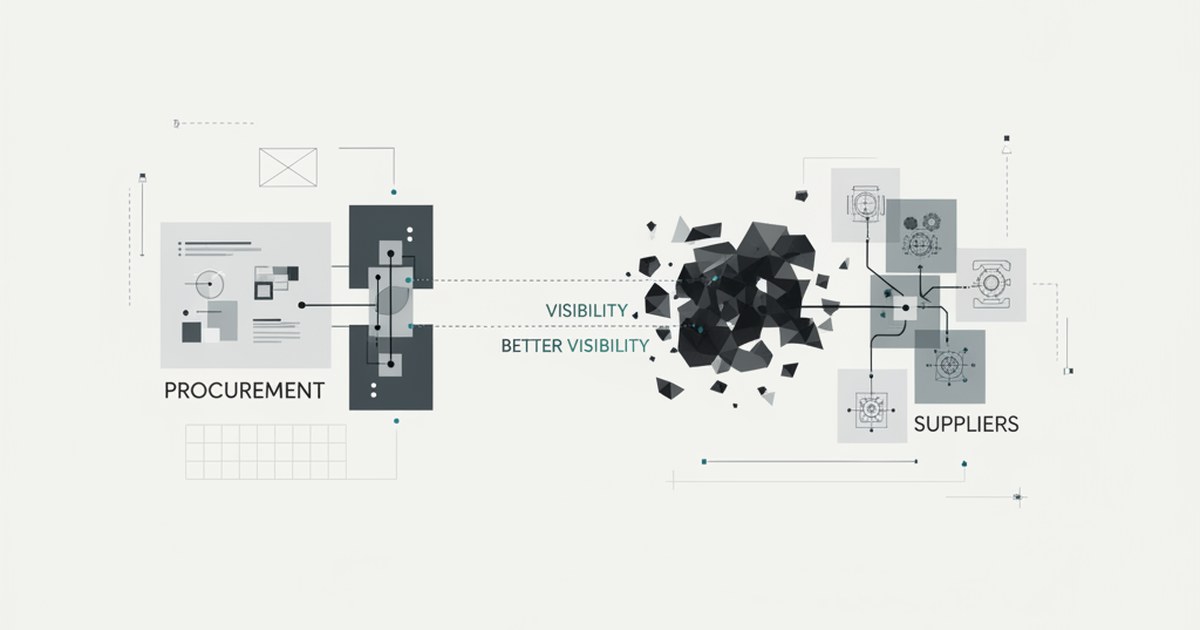
Why Procurement Needs Better Visibility Into Supplier Capacity
In today’s fast-paced business environment, disruptions in the supply chain can lead to significant financial losses and reputational damage. Consider a scenario where a manufacturer receives late shipments due to an underperforming supplier. As production lines halt or slow down, the impact on revenue becomes palpable. This situation emphasizes one crucial aspect of procurement — the pressing need for better visibility into supplier capacity. Understanding supplier capabilities and limitations is not just a nice-to-have; it is essential for maintaining continuity and driving operational efficiency.
Understanding Supplier Capacity
Supplier capacity refers to the maximum output that a supplier can deliver in terms of quantity and quality, which directly affects lead times and order fulfillment. For procurement teams, accurately assessing this capacity is challenging yet essential. Supply chains are more interconnected than ever, with multiple suppliers often plugging into a single operation. Without a clear view into each supplier’s potential and constraints, businesses may face unexpected delays and production bottlenecks. The reality is that many organizations still rely on outdated methods to gauge supplier capacity. The use of spreadsheets, informal communication, and insufficient data analytics limits procurement leaders’ insights. This lack of transparency can create an unpredictable supply chain landscape, exacerbating issues as consumer demands fluctuate. For procurement professionals, having insight into how much a supplier can produce enables better planning, ensures timely deliveries, and optimizes relationships with key partners.
The Cost of Limited Visibility
When procurement lacks visibility into supplier capacity, the consequences can reverberate throughout the organization. Imagine a company that launches a new product but miscalculates the required materials, only to learn that one of its primary suppliers is operating at 70% capacity due to labor shortages. This misjudgment leads to delayed product releases, increased costs, and unhappy customers. The financial loss can range from missing quarterly revenue goals to incurring excess freight fees due to rushed shipments. Additionally, suppliers with limited visibility often struggle to make accurate predictions about their own capacity. This situation can lead to inventory overflow or shortages, both of which can hurt profitability. For procurement leaders, achieving better visibility into supplier capacity is not just about mitigating risks; it is about strategic planning and maximizing return on investment.
Leveraging Technology for Improved Insights
Investing in software solutions provides a straightforward pathway to better visibility of supplier capacity. Advanced procurement technologies—such as cloud-based platforms and data analytics tools—can enhance real-time insights into supplier performance. By harnessing data from multiple sources, organizations can identify trends, flag potential issues, and make informed decisions based on supplier capabilities. For instance, automation software can aggregate supplier data, such as current inventory levels, production schedules, and historic performance metrics, in one dashboard. This holistic view offers procurement teams a clearer understanding of what suppliers can realistically deliver. In turn, leaders can forge stronger partnerships by better aligning their needs with supplier capacities, ensuring that both sides work collaboratively toward shared business objectives.
Collaborating with Suppliers for Strategic Alignment
Another critical component of gaining visibility into supplier capacity is establishing open channels of communication. Regularly engaging with suppliers fosters a collaborative environment where both parties can share vital information. Procurement teams should prioritize building relationships with suppliers by discussing forecasts, production capabilities, and potential challenges they may face. Consider a leading automotive company that implemented regular check-ins with its key suppliers. This consistent communication helped identify capacity constraints earlier, allowing for proactive resolutions. As a result, they achieved a 15% decrease in product lead times and significantly improved supplier relationships. By fostering transparency, both parties contribute to a shared understanding and strategic alignment, allowing procurement leaders to drive long-term success.
Impact on Business Continuity and Growth
The ultimate goal of gaining better visibility into supplier capacity is to drive measurable business outcomes. When procurement teams have a clear understanding of what suppliers can deliver, organizations can more effectively meet customer demands and minimize disruptions. Improved supplier insights create a foundation for more strategic procurement decisions, enabling businesses to adapt to market changes without compromising on quality or efficiency. Investment in supplier capacity visibility can enhance forecasting accuracy by around 20-30%. This improvement leads to more reliable planning, reducing excess inventory and associated carrying costs. The ability to anticipate and respond to changes—from fluctuating demand to unexpected delays—empowers procurement leaders to not just react but strategize for the future. For organizations striving for sustainable growth, improved supplier capacity visibility also translates into stronger competitive advantages. By ensuring reliability in supply chains, procurement professionals strengthen their company’s reputation and build trust with customers and partners. While every procurement team may not achieve perfection in understanding supplier capacity overnight, the benefits of working toward this goal are undeniable. It requires an investment of time, technology, and relationship-building—but the return often significantly outstrips the costs. In this era of global supply chains fraught with uncertainty, aligning procurement strategies with supplier capabilities is not merely a tactical decision but a strategic necessity. Improving visibility into supplier capacity will position organizations to navigate future challenges, drive operational efficiencies, and ultimately achieve bottom-line results that foster continued growth.